
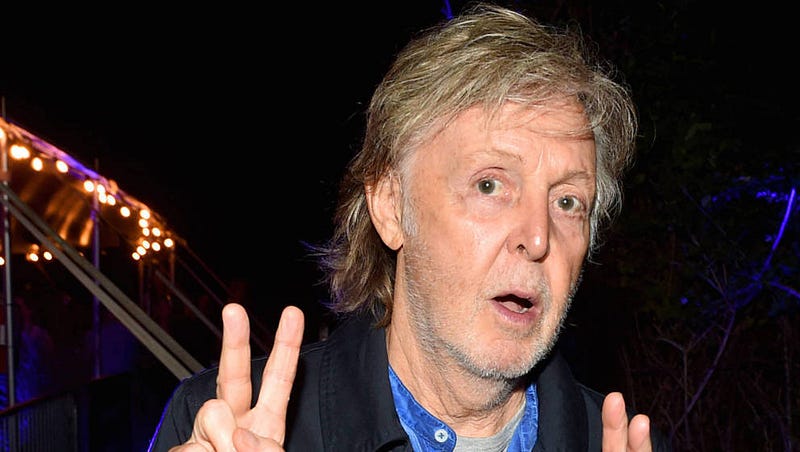
Big names such as Beatle Paul McCartney, TV chef Jamie Oliver and former Spice Girl Geri Halliwell have recently announced or already published their own children’s books. The fear is therefore growing in the profession that writers and illustrators who actually make a living from children’s literature will find it even more difficult to reach readers.
And the fear is probably not entirely unfounded: a recent survey by the Writers’ Copyright Association (ALCS) showed that the average British children’s writer earns just seven thousand pounds (a good eight thousand euros) a year, the Guardian reported. For comparison, David Walliams, the former host of Britain’s Got Talent, sold 35,000 copies of Spaceboy in the first week alone, earning him more than the annual average mentioned above.
Celebrities want to strengthen their “brand” in an easy way
Piers Torday, author of the successful youth trilogy The Last Wild, is convinced that the scale is strongly tilted in favor of celebrities: when they decide to write books, publishing houses come to their aid with huge promotional and marketing support. “The problem is that stars from other fields, who have never shown any interest in fiction before, see young people’s literature as an easy way to extend their ‘brand,’” he commented to the Guardian. “When overworked parents who don’t have time to follow reviews walk into Sainsbury’s, they’re going to grab that name they’re already familiar with.”
“It does readers no favors to first see bad literature wrapped in stardom on every shelf,” commented literary agent Claire Wilson. “In department stores and other chains, as a rule, they offer a permanent selection of the biggest brands and the most recognizable names. I would prefer to see a new generation of young authors introduced into the public discourse, who would thus have the opportunity to find their readers.”
Which books stand the test of time?
Anthony McGowan, who won the 2020 Carnegie Medal for Children’s Books for his novel Lark, urges shoppers to consider which books have stayed with them since childhood when choosing holiday gifts. “Which ones stuck in your heart? It’s not very likely that these were the works of star authors. They were probably books by writers who spent many years honing their gift, who drew on their own childhoods and kneaded these memories into complex, moving, powerful stories that appeal to a young reader. These are not people who are going to be famous for shaking funny anecdotes on the couch in front of a camera.
If the writers aren’t cooking in front of the cameras…
Jamie Oliver will release his youth debut, Billy and the Giant Adventure, only next year; the same applies to the singer Geri Halliwell, who has signed a contract for two books about the adventures of the heroine Rosie Frost.
“I’m just thinking: Jamie, do you really need this?” Torday remarked. “Anyway, you’re a successful chef and you do great things – we really don’t need a children’s book from you. I mean, I’m not going to bother anyone with my cooking.”
The perception in the industry is that celebrities not only pick up all the available publisher cash for advances, but also the marketing budget, which brings them, for example, guest spots on talk shows. “The biggest difference is how much work the publisher puts on the author: A star might have two days in his contract to talk about his book on various shows, but an unknown writer has to go to schools all over the country to start at the bottom. building a fan base,” explained literary agent Jo Unwin.
“Cinderella of the book business”
Independent bookstores try to recommend books by professional writers to readers. “A lot of people – both adults and children – come to us looking for a book by a big star. Having them on our shelves helps strengthen the reader’s trust in us,” said the sincere owner of Bert’s Books in London. “Having a David Walliams book in stock makes it more likely that customers will take our recommendations in conjunction with other books – and we prefer to focus on those that haven’t received the equivalent of publicity.”
Children’s writer Michael Rosen sees the central problem in the poor promotion of children’s literature at all levels: “Some children’s writers complain that celebrities seem to eat away the media attention devoted to children’s books. But we can also look at it by pointing out how little there’s really media interest in children’s books. We’re the Cinderellas of the book business, more or less overlooked, so it’s no wonder some writers get annoyed that only those colleagues who are already stars get attention.
 RCS - Business Default
Leave a comment