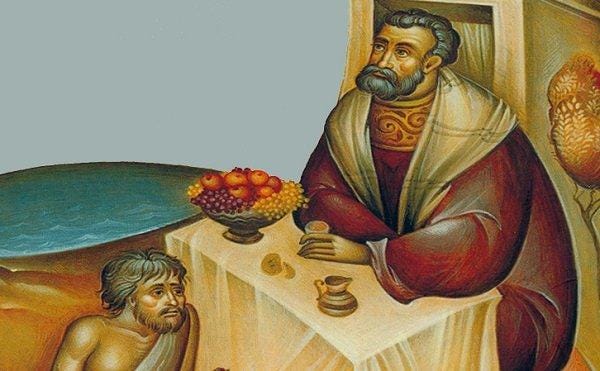
The richest and poorest have much more in common than might be expected based on stereotypes, according to Brooke Harrington, associate professor of sociology at Copenhagen Business School, after about ten years of talking to wealth managers for the richest one percent. According to the Guardian, she did not expect to hear about tax evasion in conversations with wealth managers: “I said to my colleagues, ‘Shoot me if I ever become like my clients,’ because they are really immoral people.” Too much time and all the money they have allows them to have no boundaries. One of the clients told me not to take my wife on a trip to Monaco unless I wanted to see her being conquered by ten guys. He said winning wives from other men was a local sport.’
Clients of the Geneva-based wealth manager also “believe they are descendants of the pharaohs and destined to take over the Earth.” If the poor man said something like that, he would be institutionalized immediately. For people who work with the rich, these “eccentricities” are commonplace.
One London-based wealth manager told Professor Brooke Harrington that being willing to accept with indifference what others consider scandalous behavior is an informal requirement to win business. According to him, the rich choose asset managers not only on the basis of technical competence, but also on the fact that their private lives (mother’s lesbian affairs, brother’s drug addiction, rejected lovers who break into the room) are not seen as a scandal. Many rich people who are clients of asset managers are not employed, they live off their families, but no one accuses them of being lazy because of this. When the rich turn out to be drug addicts, womanizers or part-timers, the tabloids report it, but then it’s forgotten.
The poor are not only condemned for such behavior, but it is also an argument for punishment, preventing them from accessing the resources they need to live, such as health care and food. Discussions about poverty without indignant accusations about slackers who take advantage of the welfare system, drug addicts and the like are virtually non-existent today.
These accusations are not only proof of hypocrisy, but also decisive when it comes to life and death. In the US, the general belief that the poor are simply lazy has led several states to require welfare recipients to work, even for those with a medical certificate of disability. This measure shortened the lives of many, instead of helping them find work, leaving them without medical care or food. One of the poor boys died in one of the richest countries in the world because he couldn’t go to the dentist to fix his aching tooth. As a result, there was no protest and nothing changed. At the same time, it is known that the “billionaire” who lives in the White House starts his working day at 11 o’clock, and is often on vacation.
We don’t hear much about the world’s richest people being lazy, drug addicts, or promiscuous because most billionaires are not public figures or don’t generally appear in public. The motto of one London wealth management company is: “I want to be invisible”. The richest have not only wealth managers, but often loyal employees who deny negative stories about their bosses in the media and ensure that their names do not appear on Forbes magazine’s list of the richest people on earth.
Many wealthy people who own several villas even present themselves as homeless for tax reasons. One of the richest businessmen, for example, has as many as eight citizenships in order to avoid paying property taxes. He admitted to Professor Brooke Harrington that he is not a tax resident anywhere. When the tax official asks him to show him his utility bill, he can only show him the utility bills for the house he owns in Thailand. This invoice is in a language that tax officials in Europe do not understand. On the other hand, it can happen to a poor person that he is not a resident anywhere, because no one gives him a place to live for a long time.
The rich who dare to deviate from social norms do not have to fear sanctions, and some are even forgiven for crimes such as the Trump family’s tax evasion. Poor people face fines for even small offenses, such as buying ice cream or a sugary drink with welfare money to buy food. This is also why the life expectancy of the rich is 20 years longer. Some believe that this is a just consequence of “personal responsibility” – the poor deserve a shorter lifespan because of moral transgressions.While the bar for acceptable behavior of the richest rises, the lives of the poor are increasingly restricted. They used to be allowed to eat cake here and there, today they earn public recognition with cake.
 RCS - Business Default
Leave a comment